



Registering a UK limited company now starts at £100 if you use Companies Ho...

 Blogs
 Filters
Back to Blogs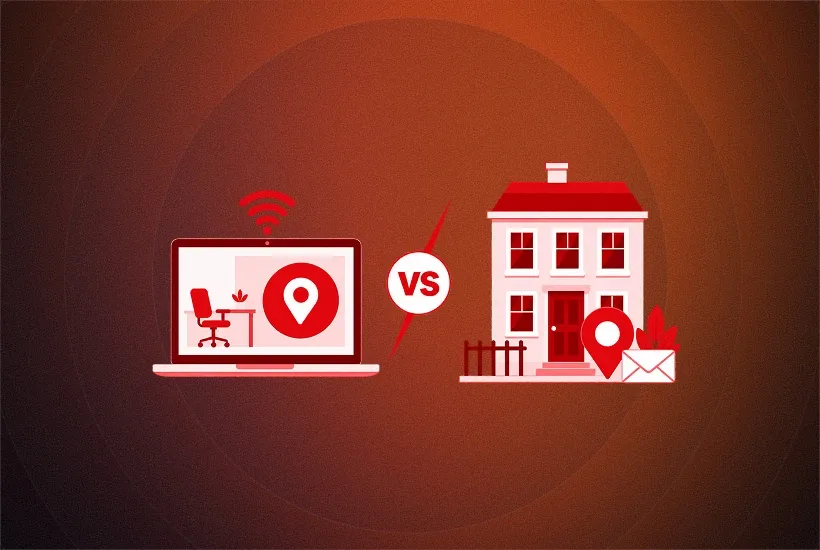

Virtual Office vs Registered Office Address UK: Which Do You Need?
Compliance
Aug 17, 2026
11 min
Understanding the virtual office vs registered office address difference is important when starting or running a UK company. Although the terms are sometimes used interchangeably, they serve different purposes. A registered office is the company's official legal address, while a virtual office is a commercial service that can provide a professional business presence, mail handling and other services.
Every UK limited company must maintain an appropriate registered office address. A virtual office, however, is optional. In some cases, a virtual office address can also serve as the registered office, provided the address satisfies Companies House requirements and the provider allows it.
This guide explains how both options work, their key differences and how to decide which address solution your business needs.
Key Takeaways
Every UK limited company needs a registered office address.
A virtual office is optional and primarily supports business operations and professional presence.
Your registered office address appears on the public Companies House register.
A registered office must be an appropriate physical address in the relevant UK jurisdiction.
A virtual office may also be used as a registered office if it meets the legal requirements and the provider permits it.
Some businesses benefit from using one provider for both services.
Why Does Your Business Address Matter?
Your company address is more than a place to receive post. It can affect legal compliance, privacy and how customers and business partners perceive your company. For limited companies, the registered office provides Companies House and other parties with an official location for company correspondence and service of documents. Companies House requires it to remain an "appropriate address" throughout the company's existence.
Businesses operating remotely or from home may also want a separate commercial address. This is where a virtual office can be useful. It can create a professional business presence without requiring the cost of leasing a traditional office.
What Is a Registered Office Address?
A registered office address is the official legal address of a UK company. Every limited company must provide one when incorporating and maintain an appropriate registered office at all times.
Companies House requires the address to be a physical UK address and located in the same UK jurisdiction in which the company is incorporated. For example, a company incorporated in Scotland must maintain its registered office in Scotland. The registered office is used for official correspondence and legal documents addressed to the company.
Importantly, the registered office address is publicly visible on the Companies House register. Business owners who do not want their residential address displayed publicly can use an appropriate third-party address, provided they have permission to do so.
What Makes a Registered Office Address "Appropriate"?
UK rules strengthened the requirements for registered offices in March 2024. An appropriate registered office is one where documents delivered to the company would ordinarily be expected to come to the attention of someone acting for it, and where delivery can be acknowledged or recorded.
This means businesses cannot simply provide an address they do not monitor. Royal Mail PO Boxes and similar PO Box-only services cannot be used as registered office addresses. Third-party addresses, including those supplied by accountants, solicitors or registered office providers, can be used if they meet the appropriate-address requirements.
What Is a Virtual Office?
A virtual office is a commercial business service that gives a company access to a professional address and, depending on the package, additional administrative services without requiring the business to rent a permanent physical office.
Services may include
Business mail receipt
Mail forwarding or scanning
A professional correspondence address
Telephone answering
Meeting room access
Workspace access
The exact package depends on the provider. Unlike a registered office, there is no general Companies House requirement for a company to purchase a virtual office. It is primarily an operational and commercial solution. Virtual offices are particularly useful for remote businesses, startups, international founders and home-based entrepreneurs that want a professional UK presence.
Virtual Office vs Registered Office Address - Key Differences
Factor | Registered Office | Virtual Office |
Required for UK Ltd? | Yes | No |
Main purpose | Legal company address | Business presence |
Companies House use | Yes | Only if suitable |
Publicly displayed | Yes | Depends on use |
Official company mail | Yes | Often available |
Extra services | Usually limited | Often included |
Best for | Legal compliance | Remote and flexible businesses |
The fundamental distinction is legal requirement versus commercial convenience. A registered office fulfils a statutory company requirement. A virtual office provides additional business functionality.
Does Every UK Company Need a Registered Office?
Yes. Every UK limited company must have an appropriate registered office address. You need the address when incorporating the company and must maintain one throughout its existence. Your registered office must remain within the jurisdiction in which your company was incorporated. A company registered in England and Wales, for example, cannot later move its registered office to Scotland.
Companies House can take action where an address does not satisfy the appropriate-address rules. In some circumstances, an inappropriate registered office can be replaced with a Companies House default address, and failure to provide a compliant replacement can ultimately put the company at risk of being struck off.
Does Every Business Need a Virtual Office?
No. A virtual office is optional. A business with its own suitable commercial premises may have little reason to purchase one. Similarly, an owner comfortable using an appropriate existing address for business purposes may not need a virtual office.
However, it can be valuable when you:
Work from home
Operate remotely
Do not maintain permanent office premises
Want a professional business address
Want greater separation between home and business
Are establishing a UK presence from overseas
The decision should therefore be based on how your business operates rather than company-registration requirements alone.
Can a Virtual Office Be Used as a Registered Office?
Potentially, yes. A virtual office address can serve as your company's registered office if it satisfies Companies House's appropriate-address requirements and your provider specifically permits the address to be used for registered office purposes. The service must ensure company correspondence can reach someone acting on behalf of the company and that delivery can be acknowledged. You must also have permission to use the address.
Do not assume every virtual office package includes registered office use. Some providers distinguish between:
Virtual business address
Registered office address
Director service address
Mail forwarding
Check exactly what is included before registering your company.
Registered Office vs Business Address - Are They the Same?
Not necessarily. A registered office is the company's statutory address registered with Companies House. A business or trading address is where the company presents itself as conducting business or receiving ordinary commercial correspondence. They can be the same address, but they do not have to be.
For example, an online business could use a registered office service for statutory correspondence while using a virtual business address for customer and supplier communications. Understanding this distinction helps businesses avoid using an address for a purpose their service agreement does not cover.
What About a Director's Service Address?
A director's service address is another concept that should not be confused with the company's registered office. When a director is appointed, Companies House requires a service address for correspondence. This address appears on the public register. A director's usual residential address is provided separately and is generally kept off the public register.
A director's service address can be the same as the company's registered office or another suitable address. This is particularly relevant for entrepreneurs who want to avoid displaying their home address publicly.
Why Home-Based Businesses Should Consider Privacy?
Using your home as your company's registered office may appear convenient, but the address will be publicly accessible through Companies House. If privacy is important, consider arranging an appropriate alternative address before incorporation rather than initially registering your home address.
Companies House itself advises people who do not want their home address publicly available to use another suitable address. This makes registered office and virtual office services particularly useful for freelancers, consultants, remote businesses and entrepreneurs working from home.
Which Option Is Better for a Startup?
Most startups do not need to choose strictly between the two. You must have a registered office if you establish a UK limited company. Whether you also need virtual office services depends on your operating model. A startup working remotely may benefit from a provider offering both services. This can provide a compliant registered office alongside practical features such as business mail handling. A startup already operating from commercial premises may simply use an appropriate address it already controls.
Which Option Is Better for Overseas Entrepreneurs?
A professional address service can be particularly useful for overseas founders establishing a UK company. UK limited companies still need an appropriate registered office in the relevant UK jurisdiction, even where their directors or shareholders live abroad. A suitable address service can therefore provide the necessary UK presence for official correspondence.
A broader virtual office package may also help an overseas entrepreneur establish a professional-facing UK business address without leasing physical premises. However, a virtual office does not by itself establish tax residence, immigration status or a substantive physical UK operation. Those issues should be assessed separately.
Registered Office and Virtual Office Costs
Costs vary considerably between providers and locations. A basic registered office service generally focuses on receiving statutory correspondence. Virtual office packages may cost more because they can include additional services such as commercial mail handling, scanning, forwarding, telephone answering or meeting facilities.
When comparing providers, consider more than the headline price. Check:
Which address uses are permitted
What mail is accepted
Whether mail forwarding costs extra
Whether director service addresses are included
Whether Companies House correspondence is handled
How quickly mail is forwarded or scanned
Choosing the cheapest service can become expensive if essential features must later be purchased separately.
What Has Changed for UK Companies?
Address compliance is now subject to stronger Companies House requirements. Since March 2024, companies must maintain an appropriate registered office and cannot use PO Box-only addresses. Companies must also provide Companies House with a registered email address, although that email address is not published on the public register.
There are also wider Companies House reforms affecting company owners and officers. Mandatory identity verification began on 18 November 2025. New directors must verify their identity, while existing directors and people with significant control are being brought into the requirements according to applicable transition and verification dates.
These changes make accurate company information and reliable address arrangements increasingly important.
How to Choose Between a Virtual Office and Registered Office Service?
Start by asking what you actually need the address to do. If your only requirement is satisfying the statutory address requirement for your limited company, a registered office service may be sufficient.
If you also need a professional address for everyday business activity, mail handling or a more established commercial presence, a virtual office may provide greater value. For many remote and overseas businesses, a combined package can be the simplest solution.
Before purchasing any service, confirm that the provider explicitly supports each intended use. An address marketed as a "virtual office" should not automatically be assumed to qualify for registered office use.
How StartMyBusiness Can Help?
Setting up a UK company involves more than selecting an address. Entrepreneurs also need to choose the right legal structure, prepare incorporation information, understand tax requirements and establish processes for ongoing compliance.
StartMyBusiness supports entrepreneurs through company formation, international company formation, business planning, accounting and other startup requirements. Our platform also provides business tools designed to help founders move from an idea to an operational and scalable business.
Whether you are launching from within the UK or establishing a UK business from overseas, professional guidance can help ensure your company is structured correctly from the beginning.
Conclusion
The virtual office vs registered office address decision becomes straightforward once you understand their different purposes. A registered office is legally required for every UK limited company, while a virtual office is an optional commercial service designed to provide a professional address and additional business support.
For many startups, home-based businesses and overseas founders, a provider that offers both can be a practical solution. Whatever option you choose, make sure the registered office meets current Companies House requirements and that you have permission to use the address.
Julia Richards
Our Entrepreneurship Advisor and Head of Content, Julia has spent the past 20 years assisting entrepreneurs with all aspects of business launch and growth strategies in various industries around the globe.
Need the Right Setup for Your UK Business?
StartMyBusiness makes UK company formation simple for local and international entrepreneurs. Our expert support helps you set up correctly and stay prepared for future growth.
Start your UK company formation with StartMyBusiness today.Questions?
What is the difference between a virtual office and a registered office in the UK?
Can I use a virtual office as my registered office address?
Can I use my home as my company's registered office?
Can I use a PO Box as my registered office?
Do I need both a registered office and a virtual office?
Content Table
- 1. Why Does Your Business Address Matter?
- 2. What Is a Registered Office Address?
- 3. What Makes a Registered Office Address "Appropriate"?
- 4. What Is a Virtual Office?
- 5. Does Every UK Company Need a Registered Office?
- 6. Does Every Business Need a Virtual Office?
- 7. Can a Virtual Office Be Used as a Registered Office?
- 8. Registered Office vs Business Address - Are They the Same?
- 9. What About a Director's Service Address?
- 10. Why Home-Based Businesses Should Consider Privacy?
- 11. Which Option Is Better for a Startup?
- 12. Which Option Is Better for Overseas Entrepreneurs?
- 13. Registered Office and Virtual Office Costs
- 14. What Has Changed for UK Companies?
- 15. How to Choose Between a Virtual Office and Registered Office Service?
- 16. How StartMyBusiness Can Help?
- 17. Conclusion
Latest Blogs
 Compliance
7 min
Company Registration Costs in the UK: Full 2026 Breakdown
 Operations
9 min
Why Your Small Business Needs a Telephone Answering Service
Running a small business often means switching between customers, sales, ad...
 Legal Assistance
7 min
Company Formation in Dubai: Free Zone vs Mainland Setup Guide 2026
Dubai is one of the world’s most popular locations for international busine...
 Legal Assistance
9 min
How to Register for VAT in the UK: 2026 Guide for Small Businesses & Startups
For a growing UK business, VAT registration is one of those milestones that...